
Reviewed by medical experts • For informational purposes only
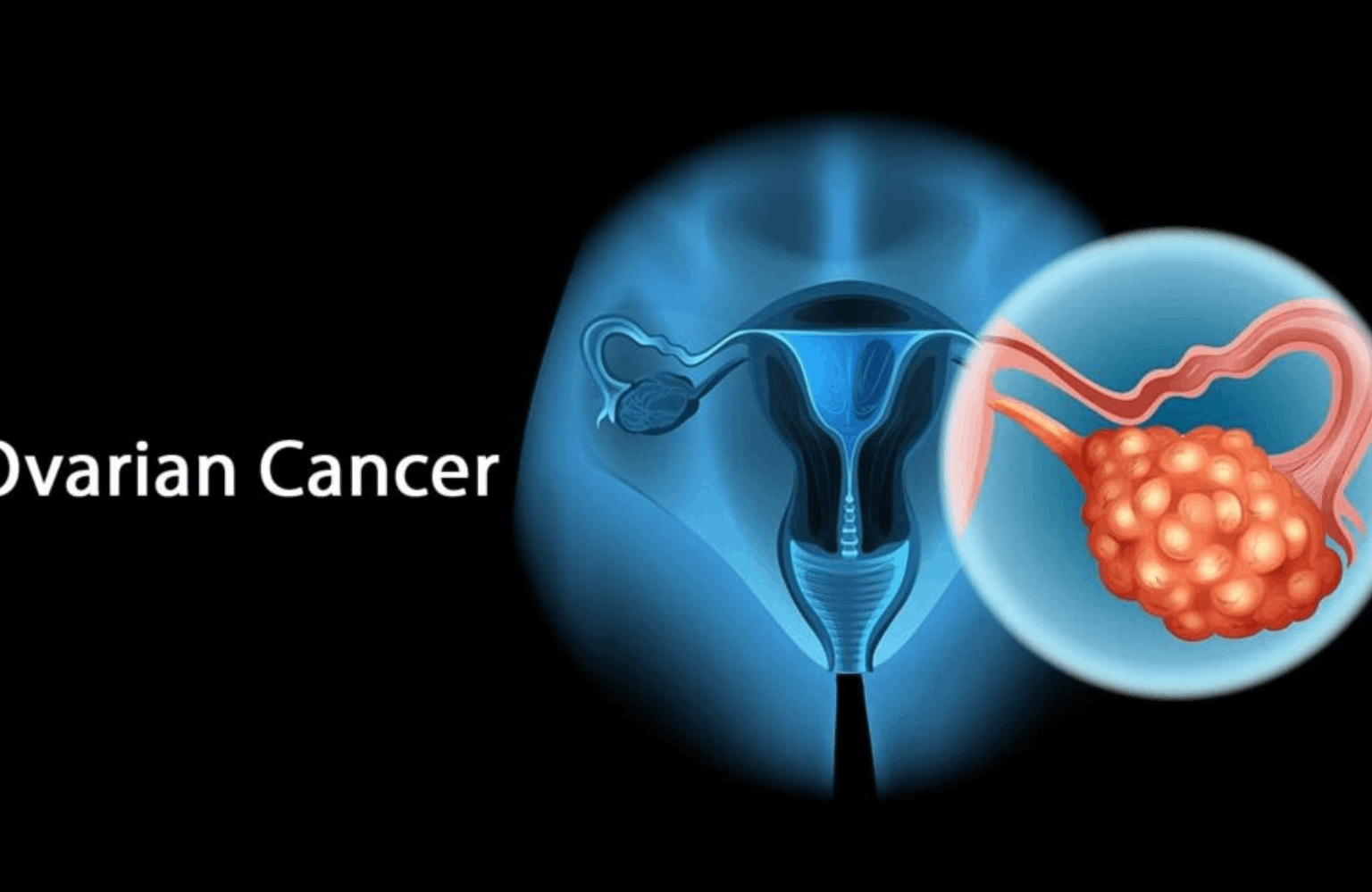
Ovarian cancer correlates with the Ayurvedic concepts of Arbuda representing malignant tumors and Rakta Gulma, a blood-based abdominal mass specific to women. It arises when aggravated Vata and Kapha doshas obstruct the Artavavaha Srotas or reproductive channels causing vitiated blood and tissues to solidify into deep-seated fixed masses. Common causes include the suppression of natural urges and improper diet during menstruation which disturb pelvic circulation. Symptoms typically involve abdominal distension irregular bleeding and a palpable stone-like mass. Management focuses on clearing pelvic obstructions through Basti therapy which regulates Vata. Treatments also employ scraping herbs like Guggulu and Shilajit to reduce the mass along with alkaline preparations known as Kshara to break down tumorous tissue.
Ovarian Cancer is a type of cancer that forms in the ovaries. In Ayurveda, malignancies and tumors are generally classified under Arbuda (Tumor) or Granthi (Knot/Cyst). While there is no single Sanskrit term that translates directly to "Ovarian Cancer," the condition is understood as a mass affecting the Artavavaha Srotas (reproductive channels) and the Garbhashaya (uterus/ovarian bed). It is often correlated with Rakta Gulma (a blood-based abdominal mass specific to women) or Tridoshaja Arbuda (a tumor involving all three bio-energies),.
Modern Definition: Ovarian cancer is the growth of abnormal, malignant cells in the ovaries (the female reproductive glands that produce eggs). Ayurvedic Definition:
The causes are multifactorial, involving diet, lifestyle, and reproductive history.
Symptoms depend on the size and type of the mass.
While modern medicine classifies by cell type, Ayurveda classifies by Dosha:
Management focuses on Vata Anulomana (correcting the flow of Vata) and Lekhana (scraping/reducing the mass).
World Health Organization (WHO)
Cancer fact sheets & global burden (ovarian cancer)
https://www.who.int/news-room/fact-sheets/detail/cancer
International Agency for Research on Cancer (IARC – WHO)
Ovarian cancer epidemiology (GLOBOCAN)
https://gco.iarc.fr/
National Cancer Institute (NCI – NIH)
Ovarian cancer overview, treatment, and research
https://www.cancer.gov/types/ovarian
Mayo Clinic
Symptoms, causes, diagnosis, and treatment
https://www.mayoclinic.org/diseases-conditions/ovarian-cancer/symptoms-causes/syc-20375941
Q: Can Ayurveda treat ovarian cysts?
A: Ayurveda treats ovarian cysts under the concept of Granthi or Kaphaja Gulma. Treatments usually involve "scraping" (Lekhana) herbs like Guggulu, Shilajit, and Kanchanara, along with dietary changes to reduce Kapha and Ama.
Q: What is "Rakta Gulma"?
A: Rakta Gulma is a condition described in texts like Madhava Nidana and Charaka Samhita that occurs only in women. It presents as a mass in the uterus caused by the retention of menstrual blood due to Vata obstruction, often mimicking pregnancy symptoms.
Q: Are there specific diets for tumors in Ayurveda?
A: Yes. Ayurveda generally recommends a Kapha-reducing diet for tumors. This includes avoiding dairy, sugar, and heavy meats, and increasing the intake of bitter and pungent spices like turmeric, ginger, and black pepper to improve metabolism and reduce tissue overgrowth.
Q: What is the role of Panchakarma in ovarian health?
A: Panchakarma, specifically Basti (medicated enema), is highly effective for ovarian health because the ovaries are located in the pelvic region, which is the seat of Vata Dosha. Basti helps regulate Vata, thereby normalizing reproductive functions and reducing pathological growths.
Written By
Sathyaprek
BDS
Reviewed By
Dr. Varun Gupta
MD Pharmacology, MBBS
Last updated on
Oct 22, 2026 • 06:23 PM (IST)
Read Our Editorial Policy
Want to know more?
Have issue with the content?
Report Problem
Explore more articles about this topic
Nutrition during ovarian cancer treatment, food safety and why no diet cures cancer.
How ovarian cancer is treated with surgery, chemotherapy and targeted therapy under a specialist.
Complications of ovarian cancer and its treatment, and emergency signs.
Types of ovarian cancer: epithelial, germ cell, stromal and borderline tumours.
Ways to lower ovarian cancer risk, genetic counselling and why CA-125 is not a screening test.
Medicines for ovarian cancer: chemotherapy, PARP inhibitors and supportive care, with safety points.
