
Reviewed by medical experts • For informational purposes only
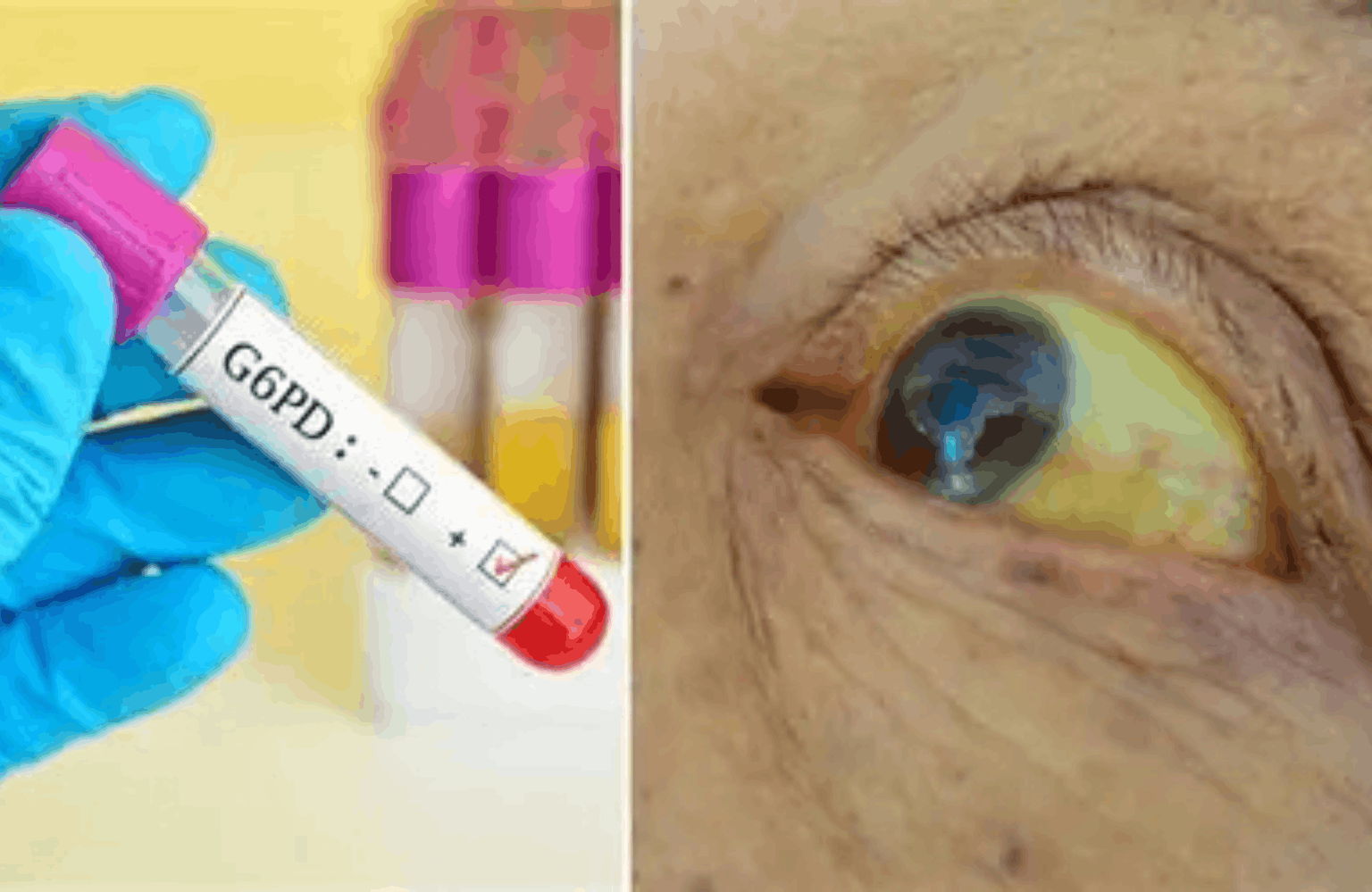
G6PD Deficiency correlates with the Ayurvedic concepts of Pittaja Pandu and Sahaja Kamala involving the destruction of Rakta dhatu by the heat of aggravated Pitta dosha. Classified as a hereditary condition it manifests when triggers like infections or incompatible foods further vitiate Pitta causing hemolysis jaundice and debility. The pathology centers on the burning of blood elements by internal heat. Management emphasizes Pitta Shamana to cool the body and Rakta Prasadana to nourish the blood. Classical treatments include cooling formulations like Phalatrikadi Kvatha and Drakshasava along with liver protective herbs such as Guduchi and Amalaki. Patients are advised to avoid hot spicy and sour foods that provoke Pitta to prevent acute episodes.
G6PD Deficiency (Glucose-6-Phosphate Dehydrogenase Deficiency) is a genetic disorder affecting red blood cells, causing them to break down prematurely (hemolysis) when exposed to certain stressors like infections, specific foods (fava beans), or medications. In Ayurveda, this condition correlates with Pittaja Pandu (anemia dominated by the Fire element) or Sahaja Kamala (congenital jaundice/blood disorder). It involves the vitiation of Pitta Dosha, which "burns" or destroys the Rakta Dhatu (blood tissue).
Modern Definition: An inherited metabolic condition where the body lacks the G6PD enzyme, which protects red blood cells from oxidative stress. Deficiency leads to hemolytic anemia (destruction of red blood cells) and jaundice.
Ayurvedic Definition: A condition described as Pandu Roga (pallor/anemia), specifically the Pittaja type, where aggravated Pitta vitiates the blood (Rakta), causing yellowish discoloration of the skin and eyes, destruction of blood elements (Rakta Kshaya), and loss of strength (Ojo-kshaya) [Madhava Nidana, Charaka Samhita]. When congenital, it falls under Sahaja Roga (hereditary disease).
While G6PD is genetic (Sahaja or Beeja Dosha), Ayurveda outlines specific "Triggers" that aggravate Pitta and precipitate an attack (hemolytic crisis):
While G6PD is a specific genetic type, the clinical presentation falls under:
Management focuses on Pitta Shamana (pacifying heat), Rakta Prasadana (soothing the blood), and avoiding triggers.
World Health Organization (WHO) – Glucose-6-phosphate dehydrogenase deficiency
https://www.who.int/publications/i/item/WHO-MHP-HPS-01.1
Centers for Disease Control and Prevention (CDC) – G6PD Deficiency
https://www.cdc.gov/malaria/about/biology/g6pd.html
National Institutes of Health (NIH) – Genetic and Rare Diseases Information Center (GARD)
https://rarediseases.info.nih.gov/diseases/6571/glucose-6-phosphate-dehydrogenase-deficiency
Mayo Clinic – G6PD deficiency
https://www.mayoclinic.org/diseases-conditions/g6pd-deficiency
National Health Portal of India – जी6पीडी की कमी (G6PD Deficiency)
https://www.nhp.gov.in/disease/blood/g6pd-deficiency
Ministry of Health & Family Welfare, Government of India – आनुवंशिक एवं रक्त विकार
https://www.mohfw.gov.in/
Q: Can Ayurveda cure G6PD deficiency?
A: G6PD is a genetic condition (Sahaja), which Ayurveda classifies as manageable (Yapya). While the genetic trait remains, Ayurvedic treatment can strengthen the liver and blood (Rakta), preventing severe attacks.
Q: What diet should a G6PD patient follow in Ayurveda?
A: Patients should follow a Pitta-pacifying diet. This includes sweet, bitter, and astringent tastes. Beneficial foods include grapes, pomegranate, old rice, and milk. Avoid hot, spicy, sour, and fermented foods [Chakradatta].
Q: Is "Punarnava Mandura" safe for this condition?
A: Punarnava Mandura is a standard Ayurvedic iron preparation for anemia (Pandu). However, in cases of hemolytic anemia like G6PD, iron supplements should only be taken under strict medical supervision to avoid iron overload, as the body recycles iron from destroyed blood cells.
Q: What is "Kamala" in Ayurveda?
A: Kamala is the Ayurvedic term for Jaundice. It often occurs as a complication of neglected anemia (Pandu) or high Pitta, where the eyes, skin, and urine turn yellow due to the "burning" of blood tissue [Madhava Nidana].
Q: Are there herbs to protect the liver?
A: Yes. Herbs like Guduchi (Tinospora cordifolia), Amalaki (Indian Gooseberry), and Bhumyamalaki are excellent for protecting the liver and soothing Pitta without causing heat [API].
Written By
Sathyaprek
BDS
Reviewed By
Dr. Varun Gupta
MD Pharmacology, MBBS
Last updated on
Oct 23, 2026 • 06:23 PM (IST)
Read Our Editorial Policy
Want to know more?
Have issue with the content?
Report Problem
Explore more articles about this topic
Inherited X-linked enzyme gene variants cause G6PD deficiency; triggers such as fava beans, some drugs and infections set off red cell breakdown.
G6PD deficiency does not progress in stages; this page explains baseline, trigger, haemolysis and recovery phases, and testing timing.
G6PD deficiency types are grouped by enzyme activity into WHO classes I to V, with common variants and carrier states explained.
Preventing G6PD crises means avoiding triggers, newborn and family screening, telling every doctor, and treating infections early.
Some medicines and household products can trigger G6PD haemolysis. Which to avoid, safer choices, and why to ask a doctor first.
G6PD deficiency diet: avoid fava beans, eat balanced meals, check labels and supplements, and know no food or herb cures the condition.
