
Reviewed by medical experts • For informational purposes only
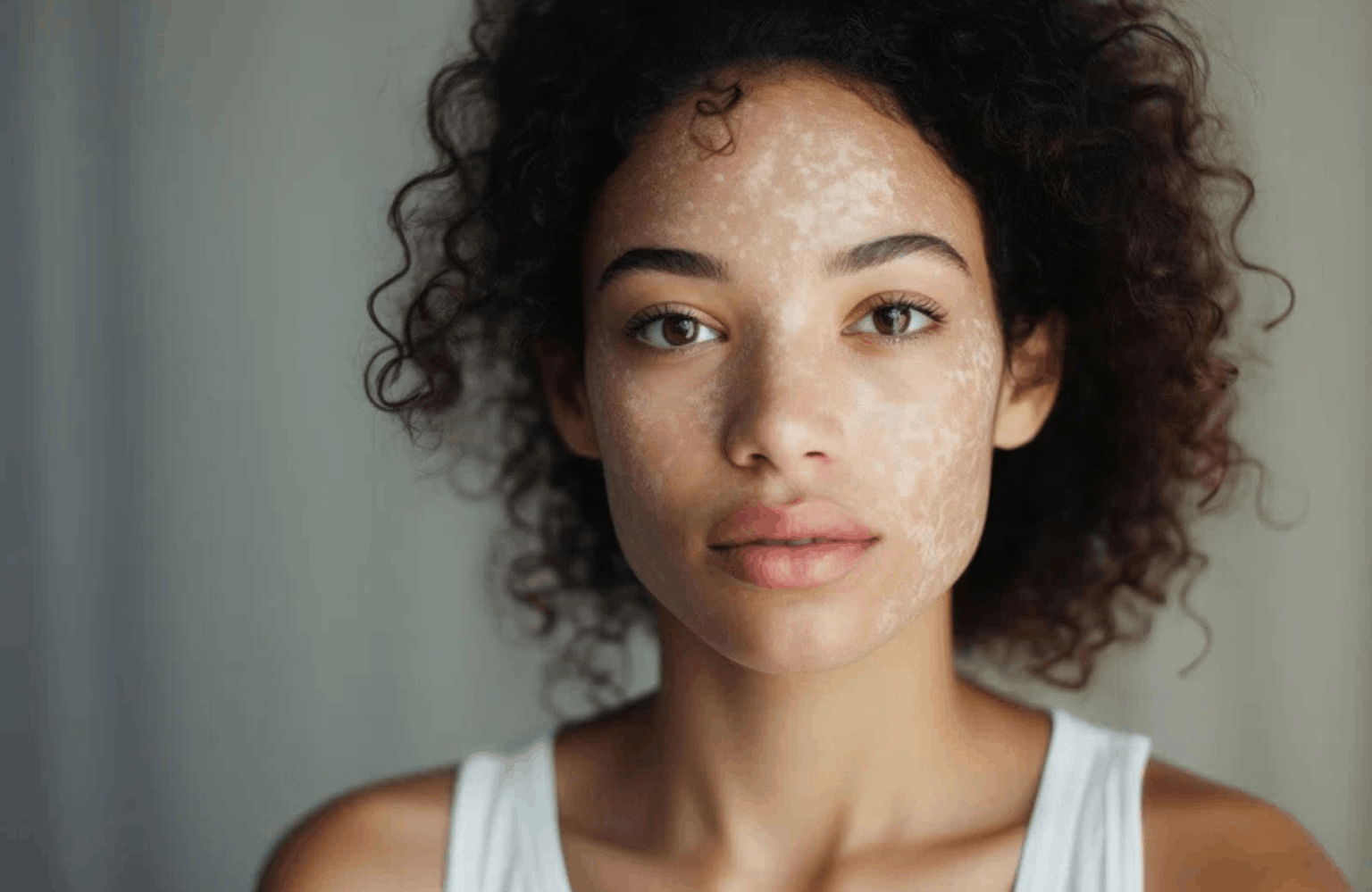
Vitiligo correlates with the Ayurvedic condition Shwitra or Kilasa representing a chronic skin disease characterized by white coppery or reddish depigmented patches. It arises from the vitiation of Tridoshas affecting the skin blood and fat tissues often due to incompatible foods like fish with milk or suppression of vomiting. Unlike other skin ailments it involves discoloration without discharge. Management emphasizes purification therapies like Virechana followed by internal medications such as Manibhadra Yoga Aravindasava and Mustakarista. External applications using formulations like Tungadrumadi Taila Kottamcukkadi Taila and Kacchuradi Curna are essential for treatment. Prognosis is generally poor if patches are fused or hair within them turns red while early cases are treatable.
Vitiligo is a long-term skin condition characterized by patches of the skin losing their pigment. In Ayurveda, this condition is known as Shwitra (white leprosy/leucoderma) or Kilasa. Unlike other skin diseases (Kustha) described in Ayurveda which may involve secretions, oozing, or decomposition, Shwitra is distinguished by its non-exudative nature, manifesting primarily as a discoloration of the skin.
Modern Definition: A chronic skin disorder that causes the loss of skin color in blotches due to the destruction of melanocytes (pigment-producing cells).
Ayurvedic Definition: A specific type of skin disease (Kustha) located in the skin (Twak) and blood (Rakta) that presents as white, reddish, or coppery patches. It is defined as a non-secreting (Aparisravi) condition, distinguishing it from other forms of leprosy or eczema.
Ayurveda attributes the causes of Shwitra to a combination of dietary, lifestyle, and psychological/moral factors.
The primary symptom is Shveta Kustha (white patches on the skin).
According to Madhava Nidana, Shwitra is classified into three types based on the dominant Dosha and color:
Management focuses on Shodhana (purification) and the use of photosensitizing herbs.
Ayurveda Case Study on Vitiligo (Shwitra)
The Action of Ayurvedic Formulations and Nitya Virechana on Vitiligo (Shwitra) – IJLPR
Discusses Shwitra and Ayurvedic concepts linked with vitiligo. (ijlpr.com)
Critical Ayurvedic Analysis of Vitiligo (Shwitra)
Critical analysis of Vitiligo (Shwitra): An Ayurvedic Perspective
Academic review correlating Shwitra (Ayurveda) with modern understanding of vitiligo. (jaims.in)
Ayurvedic Management of Vitiligo (Shwitra)
Ayurvedic Management of Shwitra (Vitiligo) – IJAPR
Case study with Ayurvedic treatment protocols and outcomes. (ijapr.in)
हिंदी स्वास्थ्य लेख: विटिलिगो क्या है, लक्षण और उपाय
विटिलिगो के लक्षण और उपाय – Herzindagi (Hindi)
Hindi article explaining symptoms, tips, and home-care information. ()
Q: Is Vitiligo (Shwitra) contagious?
A: No. Unlike some other skin diseases described in ancient texts, Shwitra is a disorder of pigmentation and blood vitiation, not an infectious disease. However, ancient texts mention "contact" as a mode of transfer for Kustha in general, but this often referred to hygiene-related infections, whereas Shwitra specifically is non-exudative.
Q: Can diet cure Vitiligo?
A: Diet plays a crucial role. Ayurvedic texts strictly forbid the intake of salt (Lavana) and sour (Amla) foods during treatment. Avoiding incompatible foods (like fish and milk) is considered essential for preventing progression.
Q: What is the most effective Ayurvedic herb for this?
A: Bakuchi (Psoralea corylifolia) is the most cited and celebrated herb for Shwitra and Kustha in classical texts. It is used both internally and externally (as a paste or oil).
Q: Why does Ayurveda mention "sin" as a cause?
A: Ancient texts like Madhava Nidana include Papakarma (sinful acts), such as disrespecting elders or untruthfulness, as causes. This reflects the holistic view that mental and moral conduct affects physical health, particularly in obstinate diseases.
Written By
Sathyaprek
BDS
Reviewed By
Dr. Varun Gupta
MD Pharmacology, MBBS
Last updated on
Oct 22, 2026 • 06:23 PM (IST)
Read Our Editorial Policy
Want to know more?
Have issue with the content?
Report Problem
India TV Hindi article on Vitiligo
विटिलिगो – लक्षण, कारण, और इलाज (India TV)
Hindi coverage of causes and what symptoms to look out for. (India TV)
Explore more articles about this topic
Vitiligo is an autoimmune loss of pigment cells - not contagious, not infection, and not caused by milk, fish or food combinations.
Vitiligo moves from onset through active spread to stability - early phases repigment best, old white-haired patches least.
Ayurvedic care may accompany vitiligo treatment, but bakuchi is a real photosensitizer - burns and new patches are documented harms.
Stop activity, repigment patiently with phototherapy, graft stable patches, protect from sun - control, not a promised cure.
Well-defined milky-white patches with normal sensation, often on the face and hands - itching, scaling or numbness mean a different diagnosis.
Onset cannot be reliably prevented, but burns, injury-triggered patches, delay and distress all can be.
