
Reviewed by medical experts • For informational purposes only
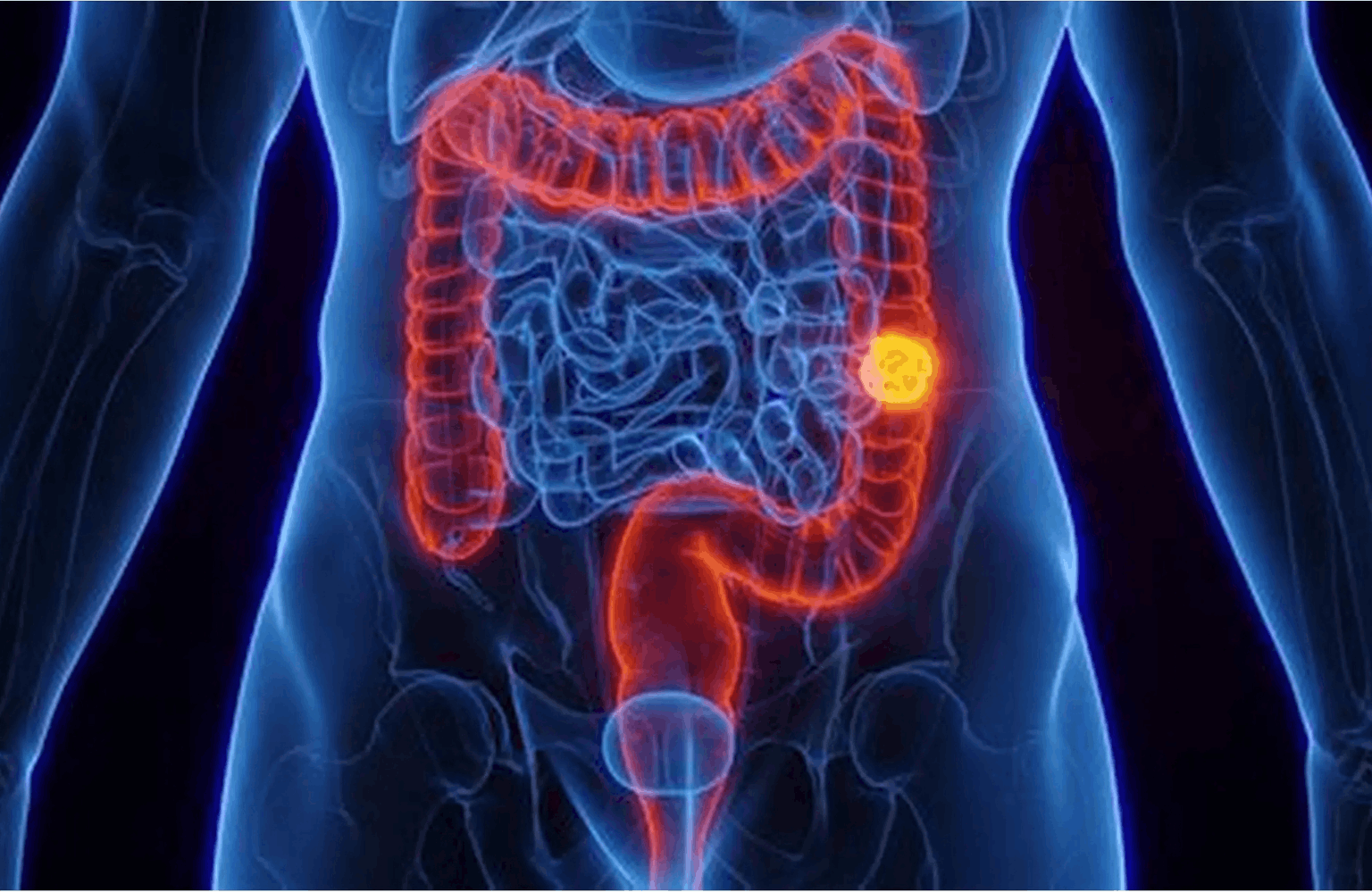
Colon cancer aligns with Ayurvedic concepts of Arbuda and Gulma manifesting as malignant growths or lumps within the abdominal region. The condition arises from aggravated Doshas particularly Vata and Kapha vitiating muscle and blood tissues often linked to weak digestion and toxin accumulation. Symptoms include abdominal masses constipation and weakness. Treatment strategies emphasize Shodhana purification particularly Vasti enemas to cleanse the colon and pacify Vata. The Ayurvedic Formulary of India highlights formulations like Chandraprabha Vati and specific Ghrita preparations involving Bhallataka to address tumors and cysts. Managing the condition involves reducing tissue mass through scraping therapies and restoring metabolic balance though advanced bleeding tumors are often considered difficult to cure requiring rigorous dietary discipline.
Colon Cancer is a type of cancer that begins in the large intestine (colon). In Ayurveda, while there is no single term that translates exactly to "Colon Cancer," the condition is understood through the concepts of Arbuda (Tumor/Malignant growth), Gulma (Abdominal Mass), and Raktapitta (Bleeding disorders). It involves the vitiation of the Mamsa (muscle) and Rakta (blood) tissues in the Pakvashaya (colon).
Modern Definition: A malignant tumor arising from the inner wall of the large intestine.
Ayurvedic Definition: An Arbuda is defined as a large, fixed, deep-seated, and slow-growing mass. When such a growth occurs in the Pakvashaya (colon) or Guda (rectum), it obstructs the channel. If the tumor is fleshy and hard, it is called Mamsarbuda; if it is rapidly growing and bleeding, it is called Raktarbuda.
The development of growths in the colon is attributed to dietary and lifestyle factors that vitiate the blood and muscle tissue.
Symptoms often overlap with Gulma (abdominal lump) and Grahani (digestive disorder).
Classified based on the dominant Dosha and tissue involvement:
Management focuses on Shodhana (Purification) to remove toxins and Lekhana (Scraping) therapies to reduce the mass.
World Health Organization (WHO) – Colorectal Cancer
Global burden, risk factors, prevention, and screening
🔗 https://www.who.int/news-room/fact-sheets/detail/cancer
International Agency for Research on Cancer (IARC) – Colorectal Cancer
Cancer statistics and research data
🔗 https://iarc.who.int
National Cancer Institute (NCI, USA) – Colon Cancer
Detailed information on causes, stages, diagnosis, and treatment
🔗 https://www.cancer.gov/types/colorectal
Centers for Disease Control and Prevention (CDC) – Colorectal Cancer
Screening guidelines and prevention
🔗 https://www.cdc.gov/cancer/colorectal
Mayo Clinic – Colon cancer: Symptoms and causes
Clinical overview with patient-friendly explanations
🔗 https://www.mayoclinic.org/diseases-conditions/colon-cancer
Ministry of Health & Family Welfare (MoHFW), India
National cancer control initiatives
🔗 https://www.mohfw.gov.in
राष्ट्रीय स्वास्थ्य पोर्टल (National Health Portal – India)
कोलन कैंसर / बड़ी आँत का कैंसर
🔗 https://www.nhp.gov.in
Q: Can Ayurveda cure colon cancer?
A: Ayurveda describes "Arbuda" (tumors) as difficult to treat (Krichrasadhya) or incurable (Asadhya) depending on the stage and type. While Ayurvedic treatments like Panchatikta Ghrita and Bhallataka can support the body and manage symptoms, advanced Raktarbuda (bleeding tumors) are traditionally considered incurable.
Q: What herbs are good for colon health?
A: Triphala is the best formulation for colon cleansing and health. Herbs like Haridra (Turmeric) and Guggulu have anti-inflammatory and scraping properties useful for growths.
Q: Is "Gulma" the same as a tumor?
A: Not always. Gulma refers to a palpable lump in the abdomen. It can be a gaseous tumor (phantom tumor) or a solid mass. If it is solid, fixed, and fleshy, it is more likely an Arbuda (tumor).
Q: Why is digestion important in preventing cancer according to Ayurveda?
A: Ayurveda believes that weak digestion (Mandagni) leads to the formation of Ama (toxins). These toxins accumulate in the tissues and disturb the cellular intelligence, leading to abnormal growths like Arbuda.
Written By
Sathyaprek
BDS
Reviewed By
Dr. Varun Gupta
MD Pharmacology, MBBS
Last updated on
Oct 23, 2026 • 06:23 PM (IST)
Read Our Editorial Policy
Want to know more?
Have issue with the content?
Report Problem
Explore more articles about this topic
The classical gulma-arbuda framework, its honest limits, and convalescent support alongside modern oncology care.
Polyps, age, family history, diet and lifestyle - what actually causes colon cancer and which risk factors you can change.
Pregnancy, children, the elderly and the under-50 surge - how age and circumstance change colon cancer care.
Obstruction, bleeding and spread, plus the side effects of surgery and chemotherapy - and the warning signs to know.
Fiber-rich prevention plate, eating through surgery and chemotherapy, and survivorship nutrition for the long run.
Diagnose, stage, then treat - surgery at the center, with chemotherapy, targeted drugs and immunotherapy by stage.
