
Reviewed by medical experts • For informational purposes only
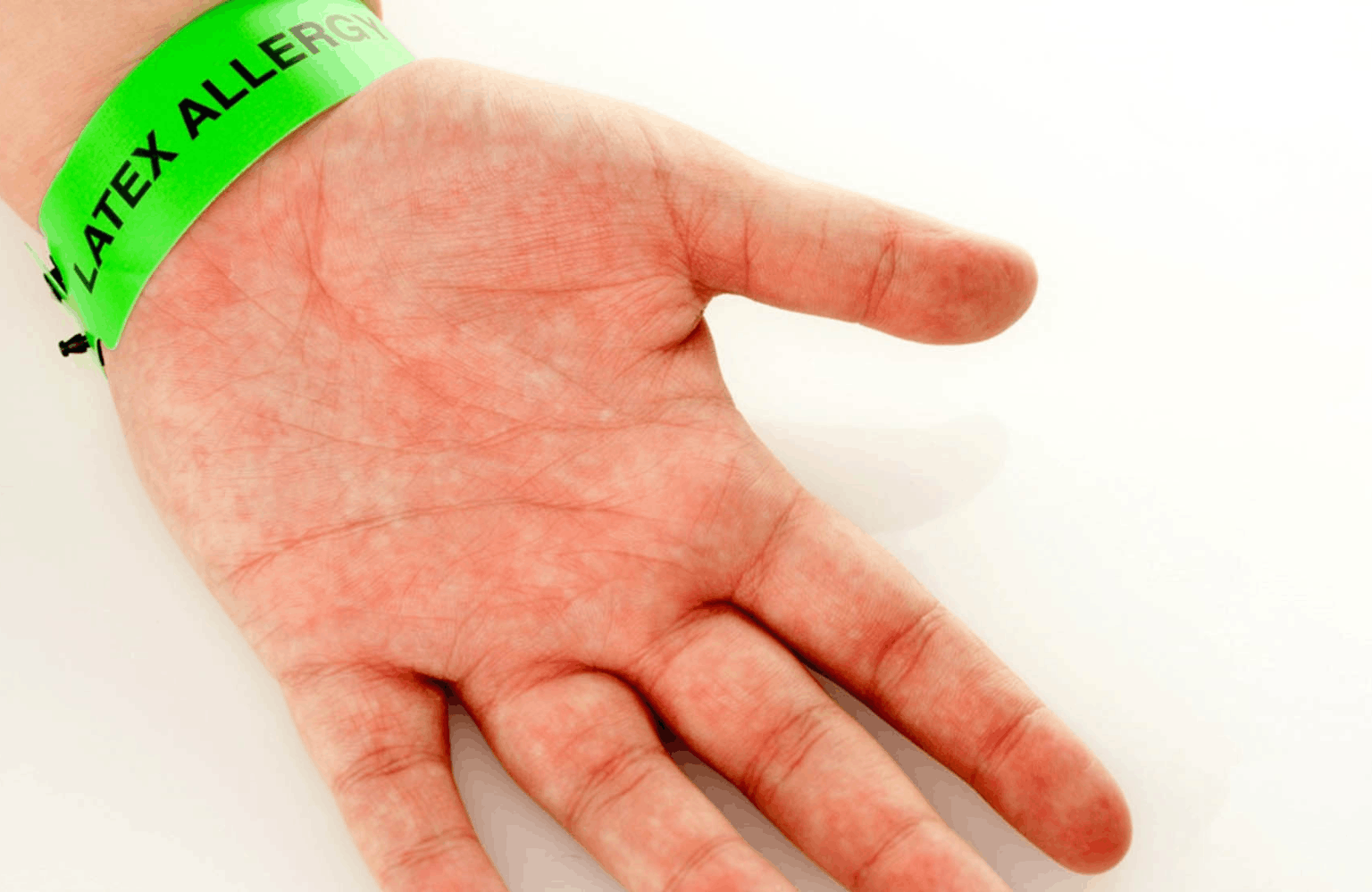
Latex allergy correlates with Ayurvedic concepts of Sitapitta Udarda and Kotha representing allergic skin manifestations like urticaria and rashes. It involves the vitiation of Rakta and Pitta doshas triggered by external contact. Symptoms include Kandu or itching Raga or redness and Visphota or blisters. Management focuses on blood purification and pacifying Pitta. The Ayurvedic Formulary of India highlights formulations such as Haridrakhanda and Mridvikadi Lehya specifically for Sitapitta and itching. Mahatiktaka Ghrita is recommended for inflammatory skin conditions and blisters. Therapies like Virechana are employed to expel toxins while herbs like Svarnaksiri are noted for treating urticaria. Treatment aims to restore the balance of Doshas and purify the blood to alleviate hypersensitivity.
Latex Allergy is a reaction to certain proteins found in natural rubber latex, a product made from the rubber tree. In Ayurveda, allergic reactions to external substances are understood as a result of Asatmya (intolerance/incompatibility) leading to the vitiation of Rakta (blood) and Pitta Dosha. It manifests as conditions described under Sitapitta (Hives/Urticaria), Kotha (Red rashes), or Visphota (Blisters), often triggered by contact with irritating plant exudates (Kshira/Niryasa).
While latex is a specific modern material, Ayurvedic texts describe similar allergic triggers under Agantuja Nidana (External Causes).
Ayurveda classifies skin allergic reactions based on the dominant symptoms:
Management focuses on Rakta Shodhana (Blood purification), Pitta Shamana (Pacifying heat), and Vishaghna (Anti-toxic) therapies.
World Health Organization (WHO) – Allergic diseases and hypersensitivity
https://www.who.int/teams/health-product-policy-and-standards/standards-and-specifications
Centers for Disease Control and Prevention (CDC) – Latex allergy
https://www.cdc.gov/niosh/topics/latex/
National Institute of Allergy and Infectious Diseases (NIAID – NIH) – Latex allergy
https://www.niaid.nih.gov/diseases-conditions/latex-allergy
Mayo Clinic – Latex allergy
https://www.mayoclinic.org/diseases-conditions/latex-allergy
StatPearls (NCBI Bookshelf) – Latex Allergy
https://www.ncbi.nlm.nih.gov/books/NBK532912/
National Health Portal of India – लेटेक्स एलर्जी (Latex Allergy)
https://www.nhp.gov.in/disease/skin/latex-allergy
Ministry of Health & Family Welfare, Government of India – एलर्जी रोग
https://www.mohfw.gov.in/
Q: What is the best Ayurvedic herb for skin allergies like latex allergy?
A: Haridra (Turmeric) is considered one of the best herbs. The formulation Haridrakhanda is specifically designed for itching (Kandu), blisters (Visphota), and hives (Sitapitta).
Q: Can Ayurvedic detoxification help with allergies?
A: Yes. Virechana (therapeutic purgation) is highly recommended to clear Pitta and Rakta toxins, which reduces the body's hypersensitivity.
Q: Is there an Ayurvedic pill for acute allergic reactions?
A: Vilwadi Gutika is a classical formulation used for poisons (Visha) and bites. It is often used by practitioners to manage acute toxic or allergic skin reactions.
Q: What foods should be avoided during an allergic flare-up?
A: One should avoid sour foods, fermented items, excessive salt, and jaggery, as these aggravate blood impurities (Rakta Dushti) and worsen itching.
Q: What is the Ayurvedic term for hives caused by allergy?
A: The closest terms are Sitapitta or Udarda. These describe the red, swollen, itchy patches typical of an allergic reaction.
Written By
Sathyaprek
BDS
Reviewed By
Dr. Varun Gupta
MD Pharmacology, MBBS
Last updated on
Oct 23, 2026 • 06:23 PM (IST)
Read Our Editorial Policy
Want to know more?
Have issue with the content?
Report Problem
Explore more articles about this topic
Latex allergy risks: anaphylaxis, asthma, hand dermatitis, food reactions and surgery-related reactions.
Stages of latex allergy: sensitisation, mild, moderate and severe reactions, and how repeat exposure raises risk.
Causes of latex allergy: repeated exposure, glove use, surgeries, atopy, cross-reacting foods and other latex reactions.
Latex allergy diet: latex-fruit syndrome, foods that may cross-react and why to avoid only trigger foods.
Latex allergy home care: avoid latex, use latex-free products, skin care and emergency preparation.
How latex allergy is managed: testing, avoidance, emergency plan, treating reactions and planning medical care.
