
Reviewed by medical experts • For informational purposes only
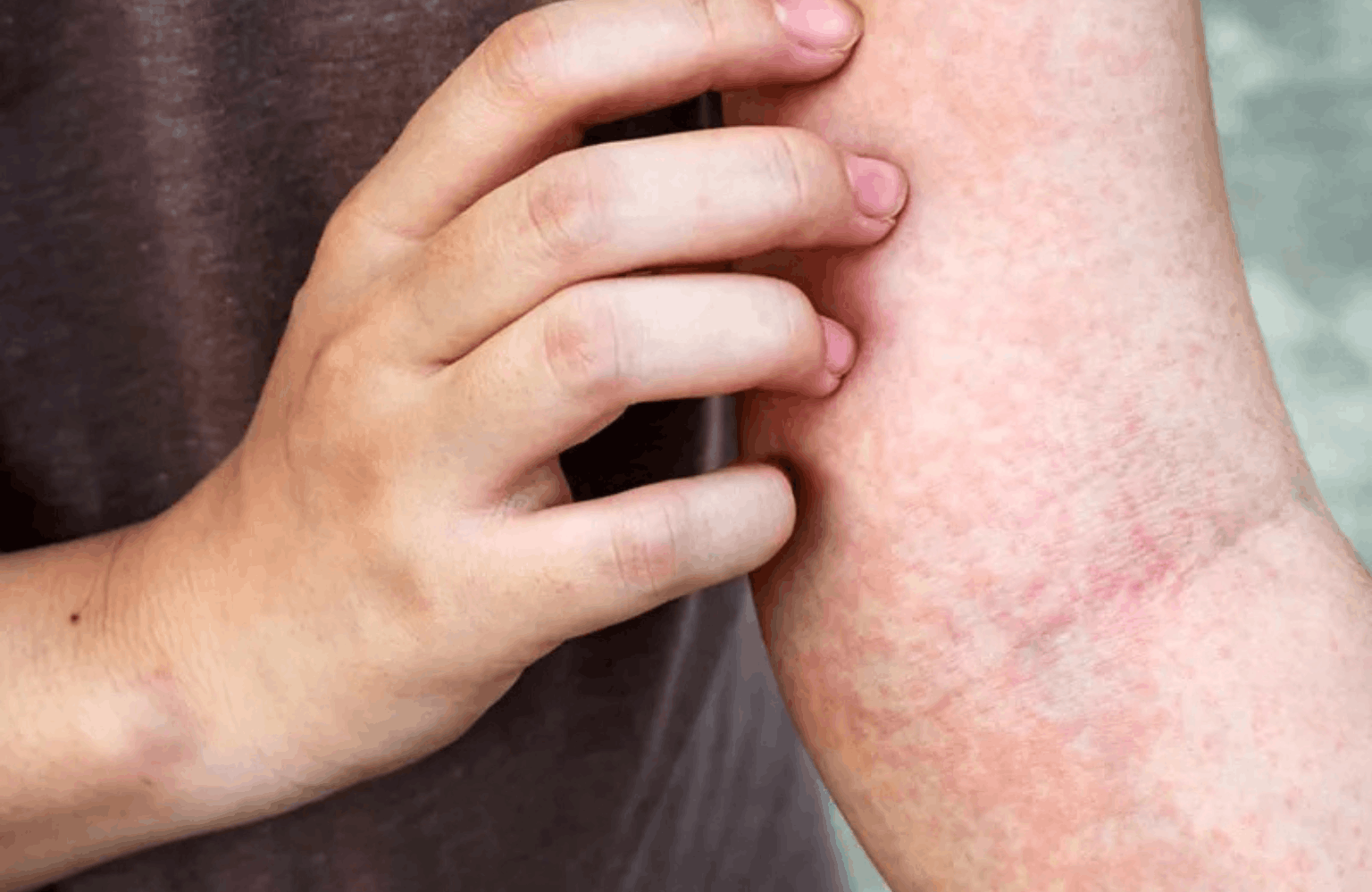
Skin allergy correlates with the Ayurvedic conditions Shitapitta Udarda and Kotha characterized by raised red rashes resembling wasp stings. These arise when Vata and Kapha doshas aggravated by cold exposure or incompatible foods known as Viruddha Ahara vitiate Pitta and obstruct the skin and blood channels. Symptoms include intense itching redness and pricking pain. Shitapitta is Vata dominant while Udarda is Kapha dominant with more swelling. Management focuses on bio purification through Vamana and Virechana to expel toxins called Ama. Internal remedies include blood purifiers like Neem and Haridrakhanda while external application of mustard oil is prescribed in Chakradatta to soothe the skin and reduce inflammation caused by the doshic imbalance.
Skin Allergy in Ayurveda is primarily understood through the conditions known as Shitapitta (Urticaria/Hives), Udarda, and Kotha. These conditions are characterized by the sudden appearance of raised, red, and itchy rashes on the skin, often compared to the swelling caused by a wasp sting. The pathology involves the vitiation of the Vata and Kapha doshas (bio-energies) due to exposure to cold or improper diet, which then aggravates Pitta and affects the skin and blood.
Modern Definition: A skin allergy is a reaction by the immune system to a substance that is typically harmless, resulting in symptoms like itching, redness, and inflammation (e.g., Urticaria, Eczema, Allergic Dermatitis).
Ayurvedic Definition:
The causes are multifactorial, involving environmental triggers, diet, and suppression of natural urges.
While often used interchangeably, Madhava Nidana distinguishes them by Dosha dominance and onset:
Management focuses on Shodhana (Purification) to remove the toxins and Shamana (Pacification) using herbs and diet.
WHO – Allergic Diseases
🔗 https://www.who.int/news-room/fact-sheets/detail/allergic-diseases
WHO overview of allergic conditions and immune mechanisms.
WHO – Skin Diseases (Public Health Importance)
🔗 https://www.who.int/teams/control-of-neglected-tropical-diseases/skin-diseases
WHO program highlighting skin disorders and allergy-related conditions.
CDC – Allergic Contact Dermatitis
🔗 https://www.cdc.gov/niosh/topics/skin/allergicdermatitis.html
Causes, occupational exposure, and prevention.
Mayo Clinic – Skin Allergy
🔗 https://www.mayoclinic.org/diseases-conditions/contact-dermatitis/symptoms-causes/syc-20352725
Trusted patient-oriented explanation.
NHP India – त्वचा एलर्जी
🔗 https://www.nhp.gov.in/disease/skin/skin-allergy
Government of India health portal (Hindi & English).
AIIMS Health Education – एलर्जी
Q: Can Ayurvedic oil massage help with skin allergies?
A: Yes. Specifically, massage (Abhyanga) with Mustard Oil (Sarsapa Taila) is recommended in classical texts like Chakradatta to relieve the symptoms of Shitapitta (hives) and Udarda.
Q: What foods should be avoided during a skin allergy?
A: One should avoid "incompatible foods" (Viruddha Ahara) such as milk combined with fish or fruit. Also, avoid excessive sour, salty, and heavy foods, as well as cold water, which can aggravate the condition.
Q: Is Turmeric good for skin allergies?
A: Yes. Turmeric (Haridra) is a primary herb for skin conditions. Formulations like Haridrakhanda are specifically prescribed for allergic rashes and itching.
Q: What is the difference between Shitapitta and Udarda?
A: Shitapitta is generally Vata-dominant with more pricking pain, while Udarda is Kapha-dominant with more redness, heavy swelling, and itching. Both are types of allergic skin reactions.
Written By
Sathyaprek
BDS
Reviewed By
Dr. Varun Gupta
MD Pharmacology, MBBS
Last updated on
Oct 22, 2026 • 06:23 PM (IST)
Read Our Editorial Policy
Want to know more?
Have issue with the content?
Report Problem
Explore more articles about this topic
Ayurvedic view of kotha and kandu as an adjunct, with safety notes.
Yoga, exercise and skin-friendly tips for skin allergy.
Diet for skin allergy: when food matters and how to test safely.
Stepwise treatment of skin allergy and what control looks like.
Antihistamines, steroid creams and other medicines for skin allergy.
Types of skin allergy: contact dermatitis, hives and eczema.