
Reviewed by medical experts • For informational purposes only
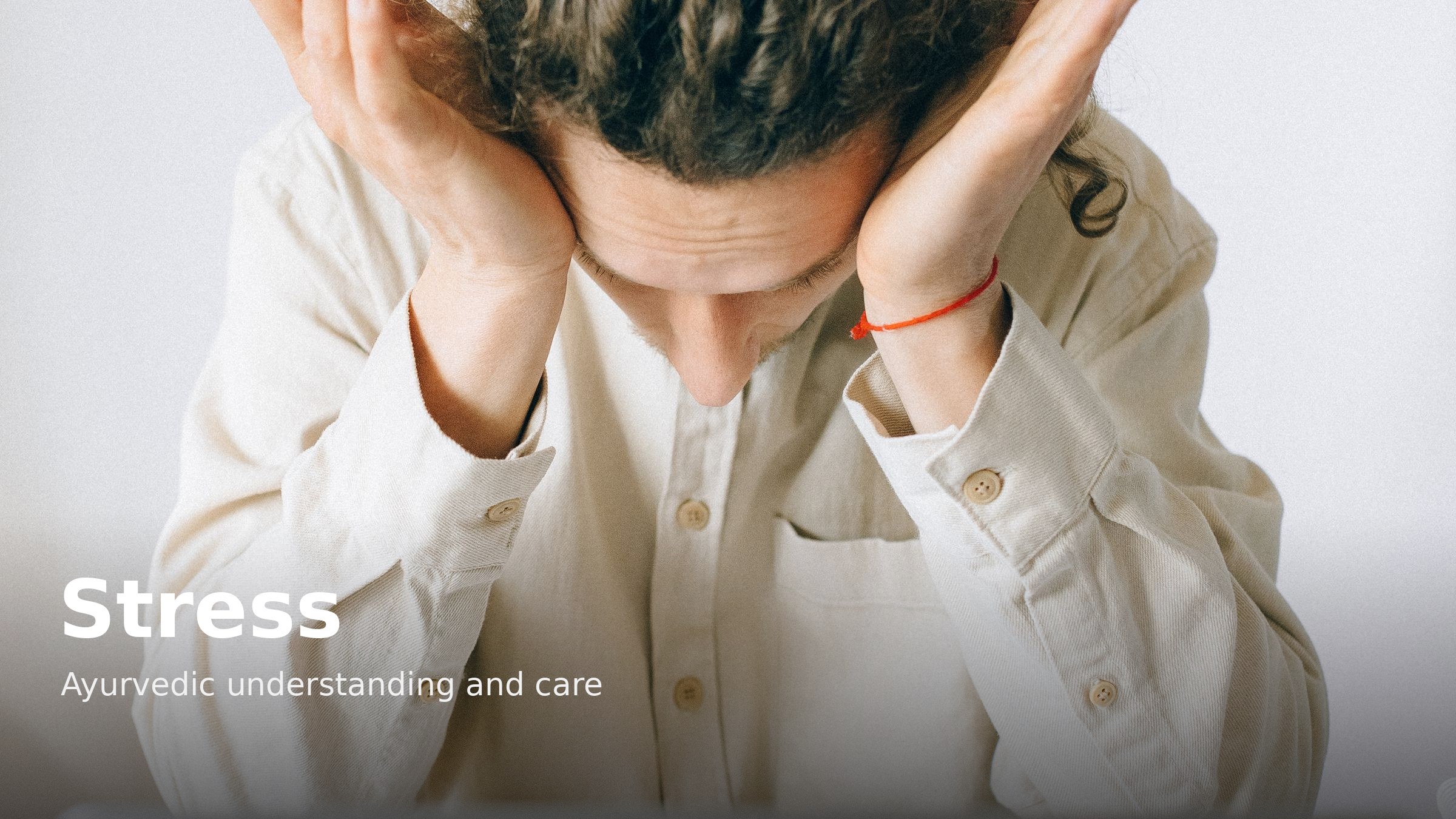
Chronic stress disturbs sleep, mood and health. Learn the classical view of Chinta and Ojas, what genuinely helps, and when to seek professional care.
Stress is the body's response to pressure or threat. Short bursts are normal and even useful; the problem is chronic stress - pressure that stays switched on for weeks or months - which can disturb sleep, mood, digestion, blood pressure and immunity. Stress itself is not a disease, but unrelieved stress contributes to real ones, and persistent anxiety or low mood deserves care in its own right.
Classical Ayurveda does not have one word for stress, but it describes the territory in detail: Chinta (chronic worry), Shoka (grief), Bhaya (fear) and Krodha (anger) as forces that disturb the mind's humors (Rajas and Tamas), cloud Sattva (mental clarity), and deplete Ojas - the refined essence said to underlie immunity and resilience. These are traditional interpretive frameworks, not exact translations of a modern diagnosis.
These terms explain a traditional model of mind and resilience. Modern medicine describes stress through nervous-system and hormone responses, measured through symptoms and, where needed, clinical assessment.
In the traditional account, chronic mental strain arises from habitual worry, grief, fear and anger; frustrated desires; sensory overload (excessive or disturbing input through the senses); stimulating or stale, processed food; suppression of natural emotions; and broken daily rhythms - irregular sleep, late nights, no routine. These are traditional explanations that map reasonably well onto modern advice, though they are not a complete account.
In modern medicine, chronic stress follows sustained pressure - work, money, relationships, caregiving, illness, loneliness - especially when demands exceed a person's control and support. Poor sleep, excess caffeine and alcohol, and no physical activity amplify it. Persistent stress raises the risk of anxiety disorders, depression, high blood pressure and digestive problems.
In the traditional account, unwholesome mental habits and sensory overload first elevate Rajas and Tamas, clouding Sattva. The disturbed mental humors then provoke the physical doshas - especially Prana Vayu, Vyana Vayu and Sadhaka Pitta seated in the Hrdaya - disturbing sleep, heart rhythm and emotional processing. Digestion weakens, Ama accumulates, tissues are poorly nourished, and finally Ojas is depleted, leaving fatigue, poor immunity and emotional instability. This is a traditional explanatory model, not a proven physiological pathway.
In modern medicine, chronic stress keeps the sympathetic nervous system and cortisol elevated, which over time disturbs sleep, appetite, blood pressure, blood sugar, inflammation and mood regulation - the mechanisms behind stress-related illness.
| Component | Traditional interpretation, not a laboratory diagnosis |
|---|---|
| Dosha | Rajas and Tamas in the mental sphere; Vata and Pitta most involved physically |
| Dushya | Manas (mind), Rasa Dhatu and Ojas in the traditional model |
| Srotas | Manovaha and Sanjnavaha Srotas |
| Srotodushti | Sanga (obstruction), a traditional explanatory concept |
| Agni | Weakened Jatharagni and Dhatvagni in the traditional account |
| Ama | A traditional concept of incomplete processing |
| Adhisthana | Hrdaya as the seat of mind in the classical model |
These are not validated categories for diagnosing anxiety, depression or any medical condition.
Common signs of chronic stress are constant worry or racing thoughts, irritability, feeling overwhelmed, poor concentration and memory, broken sleep, fatigue, palpitations, chest tightness, headaches, muscle tension, digestive upset, and changes in appetite. Classical lists are strikingly similar: cheerlessness, restlessness, dry skin and mouth, dizziness, insomnia, poor appetite and dull complexion.
Some symptoms need medical assessment rather than stress-management alone: chest pain, fainting, severe breathlessness, unexplained weight loss, or neurological symptoms should be checked promptly. And if stress has become persistent anxiety, low mood lasting more than two weeks, panic attacks, or any thought of self-harm, that is a health condition needing professional care - speak to a doctor urgently, or an emergency service in crisis.
The classical tradition reads stress patterns through dosha dominance: Vata patterns (fear, panic, racing thoughts, severe insomnia), Pitta patterns (anger, irritability, criticism, inflammatory complaints) and Kapha patterns (lethargy, withdrawal, oversleeping, low motivation). Modern practice distinguishes normal situational stress from adjustment disorders, anxiety disorders and depression, because treatment differs. The two frameworks do not map onto each other, and a dosha pattern cannot rule a mental-health condition in or out.
There is no test for stress itself. A clinician assesses symptoms, sleep, mood and life circumstances, and may use validated questionnaires; importantly, they also exclude medical causes - thyroid problems, anaemia, heart conditions and others can masquerade as stress. Blood tests and examination belong to that exclusion.
In the traditional framework, a practitioner assesses constitution, digestion, sleep, routine and pulse to plan supportive care. This assessment cannot exclude thyroid disease, depression or cardiac problems; modern evaluation comes first when symptoms are severe, persistent or unusual.
Traditional guidance favours fresh, warm, unctuous Sattvic food - whole grains, milk, ghee, almonds, dates, cooked vegetables - and reducing heavily processed, stale, overly spicy or stimulating items. Modern guidance agrees in outline: regular balanced meals, plenty of whole foods, and limiting caffeine, alcohol and sugar swings, all of which can worsen jitteriness and sleep. No single food treats stress.
This is where both traditions agree most strongly. Regular routine (Dinacharya), regular sleep, daily physical activity, time outdoors, and deliberate unwinding are the foundation. The classical tradition adds Achara Rasayana - a code of conduct including calm speech, truthfulness, freedom from anger, and regular meditation - and Satvavajaya, training the mind away from unwholesome patterns. Modern care offers the same direction through exercise, mindfulness-based approaches and cognitive behavioural therapy, which has good evidence for stress and anxiety. Reducing sensory overload - news and screen time - is a genuinely classical idea in modern dress.
For stress that has become an anxiety disorder or depression, modern treatment - talking therapies and, where appropriate, medication - is effective and should not be delayed. Classical texts name Medhya Rasayana herbs for the stressed mind: Ashwagandha, Brahmi, Shankhapushpi, Jatamansi, Guduchi and Yashtimadhu, with ghee-based preparations such as Brahmi Ghrita in traditional practice. Their traditional use does not establish that they treat anxiety or stress disorders, and evidence is limited and mixed. Herbal products can cause side effects and interact with medicines - Ashwagandha, for example, can affect thyroid function and sedation - so discuss the exact product with your clinician and a qualified Ayurvedic practitioner.
Classical texts describe Shirodhara (warm oil poured over the forehead), Abhyanga (oil massage), Nasya (medicated nasal oils) and Basti for calming Vata and restoring sleep. These are traditional relaxation procedures performed by trained practitioners; evidence that they treat stress-related illness is lacking, and enema-based procedures should never be attempted at home. They may be enjoyed as supportive care, never as a substitute for needed psychological or medical treatment.
Most stress settles when its source is addressed and routines, sleep and support improve; stress-related conditions such as anxiety also respond well to treatment. Chronic unaddressed stress, by contrast, tends to spread into sleep, mood and physical health, so early attention is worthwhile. Classical texts regard recent stress in a person of strong Sattva as readily manageable, and long-neglected depletion as slow work - a fair match for modern experience. There is no reliable promise that any herb or therapy will remove stress within a fixed period.
Both approaches converge on routine, sleep, movement, moderation and training the mind. The important difference is that modern care can assess and treat the conditions stress shades into - anxiety, depression, hypertension - with evaluated tools, while the classical framework offers a coherent lifestyle and herbal tradition for resilience. Traditional terms should be presented as a separate framework, with its limits stated. Ayurvedic care must not delay professional help for persistent anxiety, depression, or any thought of self-harm.
The Ayurveda notebook draws on discussions of Chinta, Shoka, Bhaya, Ojas, Manasika Roga and Rasayana in Charaka Samhita (Sutra Sthana, Sharira Sthana 1, Chikitsa Sthana), Sushruta Samhita, Ashtanga Hridaya (Sutra Sthana 2, on Achara Rasayana) and classical Dravyaguna texts. These are background for traditional concepts, not clinical proof of a stress-relieving effect. Exact verse citations and formulation indications should be checked by a qualified Ayurvedic editor before being quoted as direct text.
The institutional links are general resources, not endorsements of the treatment claims in this article.
No - stress is a normal response. It becomes a health issue when it is constant and starts disturbing sleep, mood or the body, and it can develop into anxiety or depression, which are treatable conditions.
Classical Ayurveda offers a well-developed framework - routine, Sattvic food, meditation, massage and Medhya herbs - that many people find supportive. Evidence that herbs treat stress or anxiety disorders is limited. Severe or persistent symptoms deserve professional care.
It is traditionally used as a Rasayana for resilience, and early research is mixed but promising. It can cause side effects and interact with thyroid medicines and sedatives. Discuss the exact product with your clinician.
When symptoms persist for weeks, when sleep or work suffer, when physical symptoms like chest pain appear, or when low mood or anxiety become constant. Any thought of self-harm needs urgent professional help.
Slow breathing, stepping away from the trigger, a short walk, and speaking to someone you trust are all sound. These are first aid, not treatment - recurrent overwhelm deserves proper support.
Explore Insomnia and browse our Disease A to Z.
Medical disclaimer: This article is for education, not an individual diagnosis or prescription. Discuss all medicines and supplements with a qualified clinician. Persistent anxiety, depression or any thought of self-harm needs professional care - seek it promptly.
Written By
Dr. Daksh
BDS
Reviewed By
Dr. Varun Gupta
MD Pharmacology, MBBS
Last updated on
Oct 22, 2026 • 06:23 PM (IST)
Read Our Editorial Policy
Want to know more?
Have issue with the content?
Report Problem
